
Issue 01
The ERP cannot talk to new suppliers
Legacy EDI setups are fragile. Every new supplier becomes a small project, and any move towards API-based ordering or modern partner integration feels harder than it should.
Modernise the ERP, production planning, and shop-floor systems your factory depends on, without putting daily operations at unnecessary risk.
Manufacturing businesses rarely run on one clean, modern platform. What we usually see is a mix of ageing ERP software, production planning tools, supplier integrations, warehouse processes, spreadsheets, and workarounds built up over years.
Sage 200, Sage 1000, older SAP R/3, Epicor, SYSPRO, and custom-built platforms.
Used to track work in progress, quality events, machine output, and shop-floor activity.
MRP and MRP II environments with years of accumulated rules and exceptions.
Multi-level structures, historical exceptions, and product variants embedded deep inside the ERP.
Stock locations, movements, batch records, and fulfilment processes.
Connections to customers, suppliers, and logistics partners — often brittle and poorly understood.
ISO 9001-related records and sector-specific controls baked into daily operations.
Barcode scanners, RFID devices, manual entry stations, and operator terminals.
Where the real day-to-day scheduling logic sits outside the official system. Familiar ground.
The system still functions well enough to avoid immediate replacement, though every year it becomes harder to change, harder to trust, and more expensive to support. For a finance-side view of what that drift adds up to, see legacy system TCO.
Does any of this sound familiar?
Legacy EDI setups are fragile. Every new supplier becomes a small project, and any move towards API-based ordering or modern partner integration feels harder than it should.
The data exists, though getting it into a usable form takes manual exports, spreadsheet work, and hours of manipulation. Production, inventory, margin, and scrap should be visible quickly — in legacy environments they are buried.
Many manufacturers are one retirement, resignation, or illness away from losing critical system knowledge. Documentation is partial or outdated, and troubleshooting starts with guesswork.
Enterprise replacement programmes often run £300K to £1M+. That is hard to justify for a business turning £5M to £50M a year, especially when the existing system still contains valuable logic.
A migration that shuts down production is not a serious option. Whether your line runs weekday shifts or close to 24/7, there is no easy window for a risky switchover.
Double-keying, manual checks, paper alongside digital processes, extra spreadsheets, and one-off fixes become part of daily operations. The system was meant to reduce friction; now it creates it.
Our preferred route is incremental modernisation. In manufacturing, that often means modernising one operational area at a time — inventory first, then BOM management, then scheduling, then reporting, or another sequence based on where the biggest constraint sits. When incremental work is not realistic, we say so directly and plan a switchover around your production calendar.
Working software appears in stages, your team validates it against real operations, and the business keeps running while the architecture improves underneath. No long wait for a single risky release.
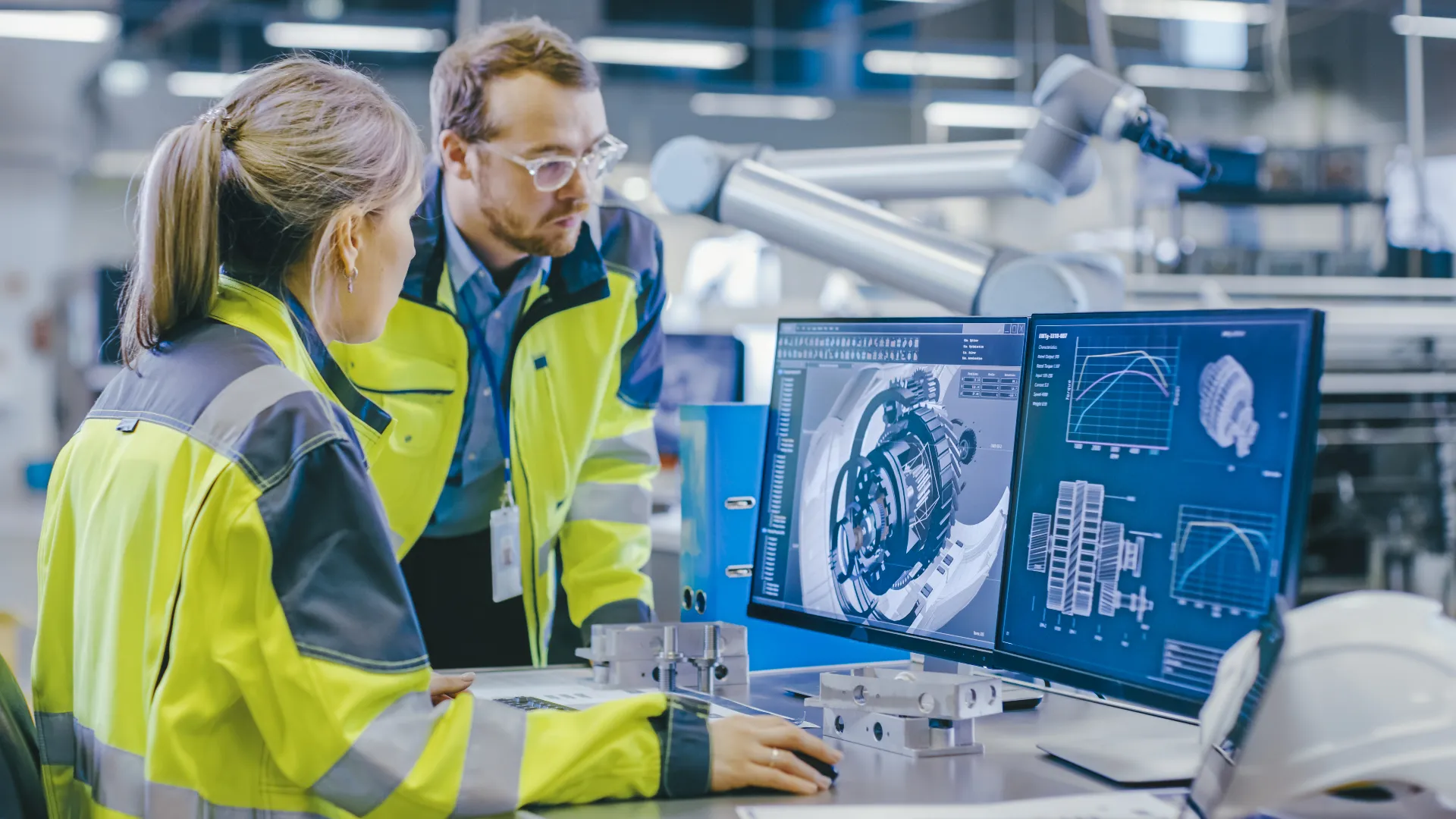
The scope is broad enough to show how risk accumulates across systems, infrastructure, and day-to-day operating practices.
Not a generic application forced awkwardly onto your production process. A modern system shaped around how your manufacturing business actually works, with logic preserved and the interface improved.
Modern APIs and cleaner integration layers. Supplier onboarding that used to take weeks can often be reduced dramatically once the architecture is modernised.
Audit trails, batch tracking, quality records, and operational history built into the system cleanly — supporting ISO 9001 and sector-specific requirements without parallel spreadsheets.
Modernised applications are typically web-based and responsive, so tablets, PCs, operator terminals, and scanners can often work through a browser or a light integration layer.
Processes that currently sit in Excel and shared folders are absorbed into the application. A clearer single source of truth for planning, costing, stock, and production control.
Responsive design, authentication, CI/CD pipeline, demo environment, test data framework, and support for internationalisation — including multi-language or multi-currency where relevant.
Click any tile to take a closer look at the sectors we modernise.
Named systems
Most manufacturing ERPs we assess sit on an older database engine that quietly determines what is and isn't safe to change. This is the most common one we see.
Book a free 30-minute discovery call and we'll talk through your manufacturing systems, your operational pain points, and what a realistic modernisation path looks like.