Hospitality: Booking & Operations Modernisation

    Modernise your booking, PMS, guest management, and daily operations systems so availability stays accurate, teams stay connected, and the guest experience runs smoothly.

    The hospitality systems we modernise.

    Guest experience depends on how well your systems work together. When they are slow or disconnected, it shows in daily operations. These are the systems we most often modernise.

    Property management systems (PMS)

    Legacy platforms handling reservations, check-in, check-out, room allocation, folios, and guest records.

    Reservation & booking engines

    Direct booking tools on your website, often disconnected from the PMS or dependent on manual entry.

    Channel management

    OTA connections with Booking.com, Expedia, Airbnb, and other platforms, sometimes managed manually or through fragile integrations.

    Rate & yield management

    Pricing by season, occupancy, room type, channel, corporate rate, and group booking.

    Guest CRM & loyalty systems

    Guest preferences, stay history, loyalty status, and marketing permissions often fragmented across systems.

    Front desk workflows

    Check-in, check-out, upgrades, deposits, payments, key cards, and guest requests.

    Housekeeping management

    Room status, cleaning schedules, maintenance requests, and turnaround tracking.

    F&B and POS systems

    Restaurant, bar, room service, kitchen workflows, and posting charges to guest folios.

    Conference, events & banqueting

    Event bookings, room setup, catering, AV requirements, and group billing.

    Common hospitality platforms

    Oracle Hospitality, Simphony, Mews, Rezlynx, and Agilysys — used across PMS, F&B POS, and central reservations in UK hotels and groups.

    Integration layers

    Connections between PMS, accounting, payment gateways, door locks, in-room technology, websites, and OTA channels. The problem is rarely one isolated system — it's the gap between systems that should work as one operational environment.
    How legacy systems hold hospitality teams back.

    The system still takes bookings and processes guests well enough to avoid replacement, though every year it becomes harder to change, harder to integrate, and more expensive to support.

    Does any of this sound familiar?

    Issue 01

    Check-in takes five minutes of fumbling between systems

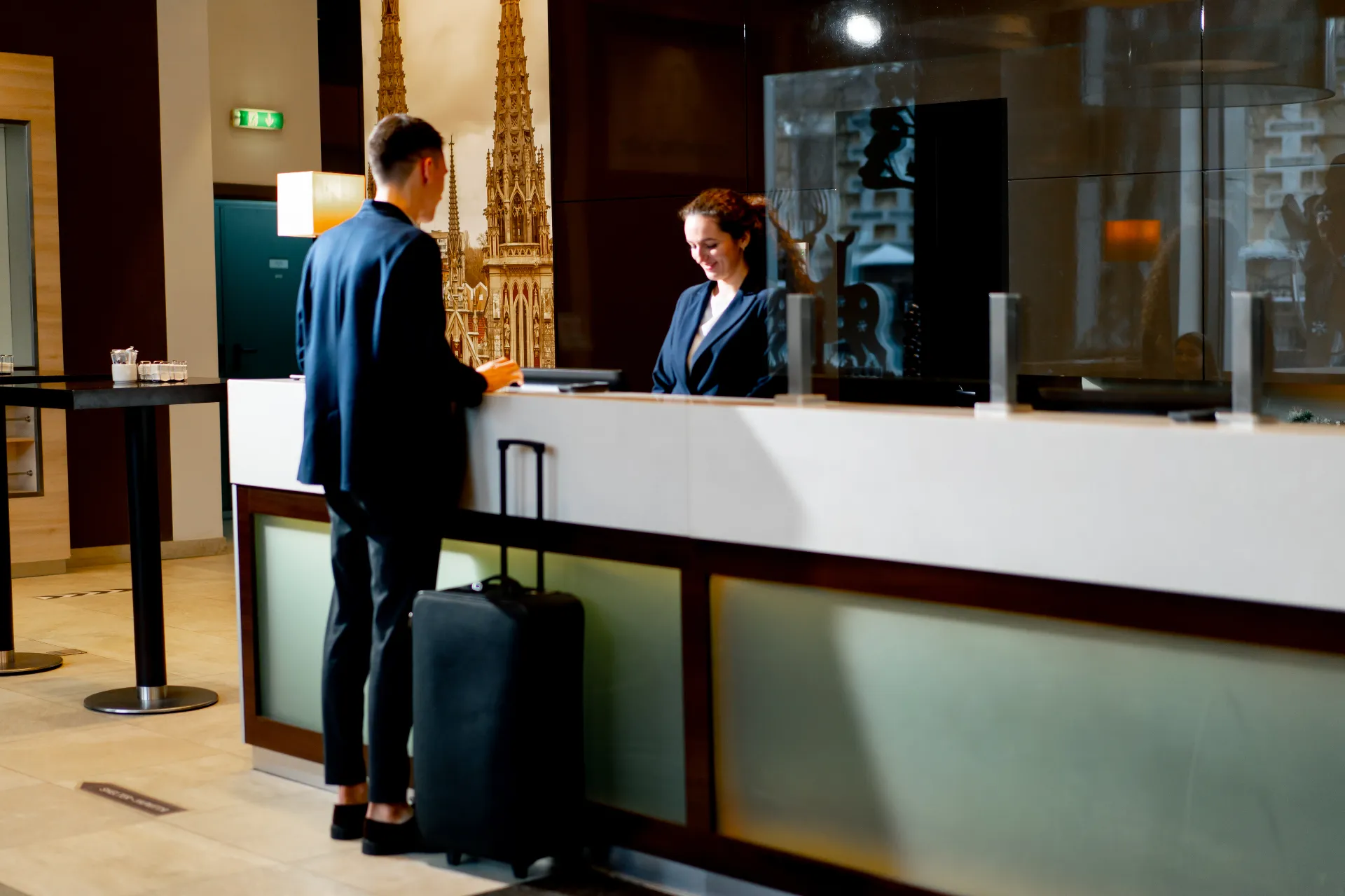
    A guest arrives, and your receptionist has to check several screens, confirm details manually, find the right booking, assign the room, process payment, and issue the key. The system should be almost invisible to the guest. Instead, it becomes the first operational friction they experience.

    Issue 02

    Availability is wrong on Booking.com and Expedia

    The channel manager does not sync quickly enough, or someone has to update availability manually after a direct or phone booking. This creates two serious risks: overbookings that damage guest trust, or rooms marked unavailable when they could still be sold.

    Issue 03

    No single view of the guest

    A returning guest may book direct once and through an OTA the next time. Your system may not recognise them as the same person. Room preferences, dietary requirements, loyalty status, previous issues, and special requests are often invisible at the point of service. That makes personalisation difficult, even when your staff want to provide it.

    Issue 04

    Mews, Cloudbeds, or Guestline don't fit

    Commercial PMS platforms work well for many standard hotel operations. But if your property has unusual room configurations, complex rate structures, integrated events, or different workflows across multiple properties, you may end up adapting your operation to the software. The spreadsheets return because the platform does not fully match how your property works.

    Issue 05

    A decade of booking and guest data that must be preserved

    Guest histories, booking records, rate performance, corporate accounts, loyalty data, and group booking patterns are commercially valuable. Any hospitality system modernisation must preserve that data carefully. Losing it means losing operational intelligence.

    Issue 06

    Housekeeping is managed by paper and radio

    Room status updates happen by phone, radio, or paper checklist. The front desk does not always know when a room is clean, inspected, or blocked for maintenance. This slows turnaround, creates unnecessary calls between teams, and makes early check-in harder to manage.

    How we modernise hospitality systems.

    We start by reviewing your current systems, data, and workflows. Booking histories, guest records, rate structures, corporate accounts, loyalty data, folios, and operational rules are identified and mapped before any changes are made.

    How we modernise hospitality systems

    What a modernised hospitality system can support.

    A connected foundation for bookings, guest management, housekeeping, F&B, reporting, and daily operations.

    Seamless check-in & guest management

    Guest details, room assignment, payment status, key card, preferences, and stay history managed from one place. Front desk teams spend less time searching between systems and more time serving the guest. Mobile check-in can be added for guests who prefer a faster, contactless arrival.

    Real-time availability & channel sync

    Availability, rates, and restrictions sync across your website, Booking.com, Expedia, Airbnb, and other channels. This reduces overbooking risk, prevents missed revenue from outdated availability, and makes direct bookings easier to manage alongside OTA reservations.

    Intelligent rate & revenue management

    Rate rules structured around season, occupancy, day of week, room type, channel, corporate agreement, or group booking. Dashboards show RevPAR, ADR, occupancy, pickup rates, and rate performance without waiting for manual reporting.

    Digital housekeeping & maintenance

    Room status updates in real time between housekeeping and front desk. Housekeeping teams receive assignments, update room status, and log maintenance issues from a mobile device — removing paper checklists and reducing unnecessary calls between teams.

    Unified F&B and operations

    Restaurant, bar, room service, and event charges posted automatically to guest folios. Conference and banqueting requirements, room setup, AV, catering, and billing linked to the booking rather than managed through separate spreadsheets.

    A stable technical foundation

    Every modernised system includes internationalisation support, responsive design, CI/CD pipeline, authentication, test data framework, and a demo environment — a platform that can keep evolving as guest expectations, booking channels, and operational requirements change.

    Hospitality modernisation: your questions answered

    Can you modernise our systems without taking the booking engine offline?
    In most cases, yes. We work in parallel with your existing systems and migrate functionality in stages. If a switchover is required, it is planned around your occupancy calendar and peak periods.
    Our guest database has 10 years of booking history. Can you migrate all of it?
    Yes. We migrate guest records, booking histories, rate data, loyalty information, corporate accounts, and relevant operational records systematically.
    We've looked at Mews, Cloudbeds, or Guestline. How is this different?
    Those platforms are designed for a broad hospitality market. If they fit your operation, they may be suitable. If your room structures, rate logic, events, group bookings, or multi-property workflows are specific, a modernised bespoke system can fit better and cost less to adapt over time.
    Can you integrate with Booking.com, Expedia, and our website?
    Yes. Channel management is a common part of hospitality modernisation. We can build real-time two-way connections between your PMS, direct booking engine, and OTA channels.
    How long does a typical hospitality modernisation project take?
    A single module, such as reservations or housekeeping, usually takes 2–4 months. A broader project covering PMS, channel management, guest CRM, and operations usually takes 4–8 months. You should see working software within the first few weeks.
    How much does it cost?
    Typical hospitality modernisation projects range from £30K–£140K depending on the number of properties, rooms, integrations, and operational complexity. This can be a more practical alternative to ongoing per-room or per-property licensing costs where standard PMS platforms do not fully fit your business.
    What about peak season?
    Major changes are planned around your occupancy calendar. We do not schedule critical switchovers during your busiest trading periods.

    Other industries we work with

    Click any tile to take a closer look at the sectors we modernise.

    Make daily hospitality operations easier to manage.

    Book a free 30-minute discovery call. We'll review your systems, constraints, and the most realistic path forward, whether that means staged modernisation or a rebuild.